Ontology
Under the agents is a written description of the company itself: what a customer, an order, an item or a contract is, how they relate to each other, and which rules apply. Every module and every agent reads the same model, so one change to it is one change everywhere.
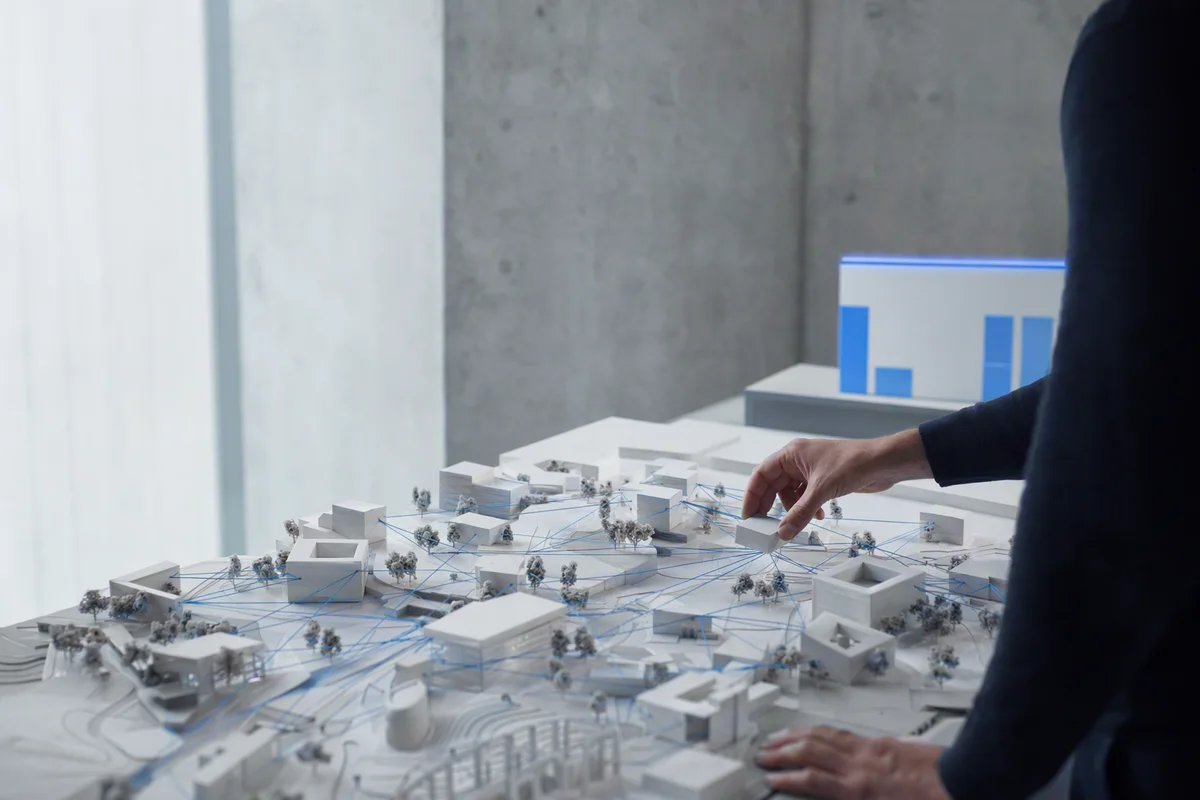
- Objects, relations and rules in one described model
- Versioned: every change has an author, a reason and an approval
- Self-developing: agents propose extensions as the company changes
- One model read by every module and every agent
Why a model, not a set of modules
Traditional business software ships its idea of a company in the code: a fixed customer screen, a fixed order, a fixed approval flow. When the business does not fit, people work around it in spreadsheets, and the real company drifts away from the one the system describes.
Hurukan starts from the other end. The company is described first, as objects, relations and rules, and the modules read that description. A module is a way of working with part of the model, not a separate database with its own idea of what a customer is.
What is in it
Objects are the nouns of the business: customer, supplier, item, order, contract, person, document. Relations connect them: this order draws on that framework contract; this item comes from those two suppliers. Rules state what must hold: a quote above a threshold needs a second approval; a certificate must be valid on the day of delivery. Actions are the verbs: what may be done to an object, by whom, under what conditions.
How it develops
The model keeps developing, because the company does. When the business changes — a new service, a new market, a new legal obligation — an agent proposes the change in the model’s own terms. A person reviews it, sees what it affects, and approves or rejects it. The approved change becomes a new version, and the previous one stays readable, so any record can be understood against the model that was in force when it was written.
Between the agents and the data
Above this layer, Agentic Logic acts in the terms the ontology defines: every action an agent can take is described here. Below it, the Data layer stores records that must conform to the model, so an import that does not fit is caught at the door rather than discovered in a report. Security and Sovereignty applies permissions to the objects and actions the model names. The ontology is the contract between all three.
What the model holds
Objects
Customers, suppliers, items, orders, contracts, people, assets and documents, each defined once with its fields, its states and its owner.
Relations
Which order belongs to which contract, which item to which supplier, which person to which unit. Explicit, so agents follow them instead of guessing.
Rules
Validations, state changes, approval thresholds and who may do what, written into the model rather than buried in screens and spreadsheets.
Actions
What can be done to each object, by whom and under which conditions. This is the vocabulary agents act in, and it sets the full range of what they can do.
Versions
Every change to the model is a version with an author, a reason and an approval, and the previous version stays readable.
Self-development
When the business adds a product line, a process or an obligation, an agent proposes the new objects and rules, a person approves them, and every module picks them up.
Works with

Projects and Documents
Programmes, stages, milestones and budgets per project, portfolio views, and every document attached to its record.
Decisions and Tasks
One approval inbox for agent proposals with sources and risk, and tasks that always have an owner.
Operations and Quality
Planning, work queue, scheduling, hours and subcontracting; inspections, non-conformances, release and certificates.
Questions
What is an ontology, in plain terms?
A written description of the things a company deals with, how they connect and which rules apply to them. Every company already has one; it is usually spread across several systems and the heads of experienced staff.
What does self-developing mean?
That extending the model is part of the system's normal work. Agents notice where the model no longer fits the business and propose changes, and people approve them. Every change still passes through a person's approval.
Can we read and export the model?
Yes, that is the design. The model is readable, versioned and exportable together with your data, because a description of your company belongs to you.
Build the company's operating system with us
Hurukan is pre-launch. If you run a company and want a sovereign, agentic system rather than another suite, we would like to hear what you need.