Data
Everything above rests on the record. The data layer brings in what the company already holds — old systems, spreadsheets, mailboxes, office documents, e-invoices — and keeps it in one data model, so every customer, item and order exists once.

- One data model instead of copies synced between products
- Connectors for import and ongoing sync
- Documents and e-invoices attached to their records
- Works alongside the office suite people already use
The record everything stands on
An agent drafting an invoice needs the order, the delivery, the price agreement, the customer’s payment history and whether there is an open complaint. In most companies those live in four products, and getting them into one place at the moment of the decision is the work integration never quite finishes. Synchronised systems are consistent only in the gaps between changes; an action needs a consistent view at a single instant.
So Hurukan keeps one record. Not copies synced between modules, but one data model in which every customer, item, order, person and document exists once, with one identity.
Bringing data in
Nobody starts empty. The data layer imports what the company already holds — from an existing ERP or accounting system, from spreadsheets, from mailboxes — and checks every record against the ontology on the way in. Records that do not fit are stopped and shown to a person rather than loaded and discovered later. Where an old system has to keep running for a while, a connector keeps the two consistent until it can be retired. The accounting program is the system that stays for good: it keeps the general ledger, statutory reporting and tax, and a connector passes approved invoices, postings and payments to it.
Documents belong to records
A contract belongs to the customer and the deal it governs; a certificate belongs to the delivery it certifies; an inbound e-invoice belongs to the order and the receipt it refers to. In Hurukan each document is stored against its record, with its revisions, and an agent reading the record reads its documents too.
Below the ontology, above the base
Above this layer, the Ontology defines what a valid record is, and the Agentic Logic layer reads and writes records only through it. Below, Security and Sovereignty decides who may read each record, logs every change, and determines where the data physically lives — on infrastructure you choose, exportable in open formats.
What the layer does
Import
Customers, suppliers, items, open orders and balances brought in from the systems you run today, checked against the ontology before they land.
Ongoing sync
Where an existing system stays in use for a while, a connector keeps it and Hurukan consistent, so the company can adopt one domain at a time.
Documents
Contracts, drawings, certificates and correspondence stored against the record they belong to, with their revisions, rather than in a shared drive.
E-invoicing
Inbound and outbound e-invoices handled as structured data and matched to the orders and deliveries they refer to.
Office suites
Mail, calendars, spreadsheets and documents from the office suite you use, connected to the record instead of retyped into it.
Data quality
Duplicates, gaps and conflicts surfaced at import and on every change, so a problem is fixed once, at the source, and not in every report downstream.
Works with

Finance
Finance and controlling: budgets from plan to forecast, inbound invoices, invoicing, payments and cash flow, linked to accounting.
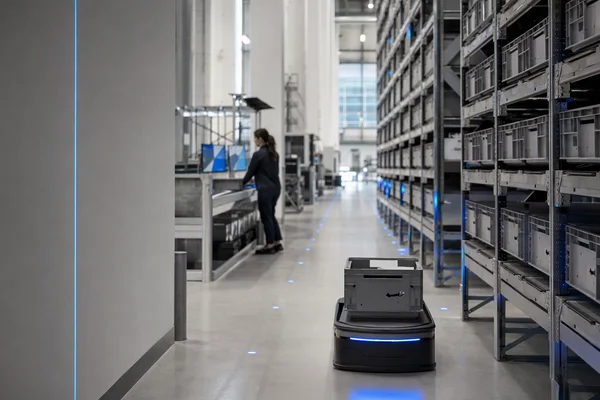
Inventory and Logistics
Item master, stock, receipts, issues, reservations and counts; delivery planning and carriers.

Projects and Documents
Programmes, stages, milestones and budgets per project, portfolio views, and every document attached to its record.
Questions
Do we have to migrate everything at once?
One domain at a time is the intended path: import it, keep the existing system running alongside through a connector, and retire it once the new record has proved itself.
Which systems can it connect to?
Connectors are built for what companies typically run: accounting programs, ERP systems, spreadsheets, mail and office suites, e-invoicing. A first conversation establishes which of them your particular stack needs, and the list of available connectors will be published as each one is built.
Where is the data stored?
On infrastructure you choose. The data layer runs wherever the rest of Hurukan runs, and the data can be exported in open formats at any time.
Build the company's operating system with us
Hurukan is pre-launch. If you run a company and want a sovereign, agentic system rather than another suite, we would like to hear what you need.